
Understanding Macronutrients: Your Blueprint to a Balanced Diet
Introduction: What Are Macronutrients and Why Should You Care?
When it comes to health and fitness, macronutrients are the real MVPs. These essential nutrients—proteins, fats, and carbohydrates—fuel your body, support growth, and keep you thriving. Unlike micronutrients, which you need in small amounts, macronutrients are required in large quantities and play a central role in your energy levels, metabolism, and overall well-being.
But it’s not just about eating more or less—it’s about getting the right balance. In this guide, we’ll break down each macronutrient, explore its benefits, and show you how to balance them to support your lifestyle and health goals.
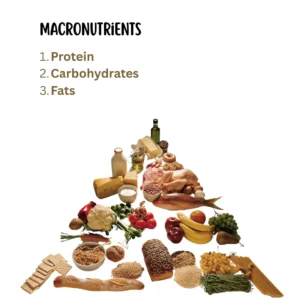
What Exactly Are Macronutrients?
Macronutrients are the primary building blocks of your diet. They supply the calories your body needs to function:
- Protein
- Fats
- Carbohydrates
Each of these plays a unique and vital role in keeping you healthy. Let’s break them down.
1. Protein – The Body’s Building Block
Protein is your body’s repair crew. It’s essential for muscle repair, hormone production, and immune support. Proteins are made of amino acids, the building blocks for muscle tissue and many other vital functions.
✅ Why You Need Protein:
- Muscle repair & growth: Especially important for athletes and active individuals.
- Immune support: Helps produce antibodies that fight illness.
- Hormonal balance: Supports hormone creation and regulation.
🥩 Best Sources:
- Animal-based: Chicken, fish, eggs, dairy
- Plant-based: Lentils, chickpeas, tofu, tempeh, quinoa, nuts
📏 How Much?
- General: 0.8g per kg of body weight
- Active individuals: 1.2–2.0g per kg

2. Fats – Not the Enemy!

Fats have been unfairly demonized, but healthy fats are vital. They support brain function, regulate hormones, and help absorb key vitamins.
✅ Why You Need Healthy Fats:
- Energy: Fats provide 9 calories per gram—more than proteins or carbs.
- Vitamin absorption: Crucial for absorbing vitamins A, D, E, and K.
- Brain health: Omega-3s and Omega-6s are essential for cognition and mood.
🥑 Top Fat Sources:
- Healthy fats: Avocados, olive oil, fatty fish, nuts, seeds
- Plant-based alternatives: Flaxseeds, chia seeds, walnuts
📏 How Much?
- 20–35% of total daily calories, focusing on unsaturated fats
3. Carbohydrates – Your Body’s Main Energy Source
Carbs often get a bad rap, but they’re essential for energy, especially for the brain and high-intensity activity. The key is to choose complex carbs over simple sugars.
✅ Why You Need Carbs:
- Quick energy: Fuels muscles and brain function.
- Brain power: Glucose is the brain’s preferred fuel.
- Digestive health: Fiber-rich carbs keep your gut happy.
🥔 Top Carb Sources:
- Complex carbs: Oats, quinoa, brown rice, legumes, veggies
- Simple carbs (in moderation): Fruits, dairy, natural sweeteners
📏 How Much?
- 45–65% of your total daily calories should come from carbs—preferably complex ones.

Finding the Right Balance: The Macronutrient Formula

Now that you know what each macronutrient does, here’s how to balance them for optimal health:
🔢 General Guidelines:
- Protein: 15–30% of daily calories
- Fat: 20–35%
- Carbohydrates: 45–65%
These ratios may shift depending on your goals:
- For weight loss: Consider lower carbs, higher protein
- For muscle gain: Increase protein and maintain balanced carbs/fats
- For endurance training: Ensure a healthy carb intake for sustained energy
Conclusion: Eat Smart, Live Well
Balancing your macronutrients isn’t just about dieting—it’s about fueling your body the right way. Each macro plays a crucial role in energy, metabolism, and long-term health. By understanding what your body needs, you can tailor your meals to feel more energetic, improve performance, and support your health goals.
Bonus Tip: Consider using a macronutrient tracker app or consulting a nutritionist to personalize your ideal macro ratio.